Is a laser scanner for 3d printer setups worth the cost?
In recent years, the integration of laser scanners into 3d printer setups has become an increasingly popular topic among makers, professionals, and hobbyists. With the rise of precision manufacturing and DIY innovation, a common question emerges: Is a laser scanner for 3d printer setups truly worth the investment? The answer lies in the nuances of accuracy, workflow efficiency, and the growing expectations of users in fields like design, prototyping, and digital archiving.
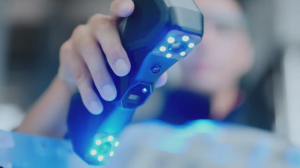 At the core of this discussion is the functionality of a laser scanner. By projecting laser beams onto a surface and analyzing the reflected data, these scanners can produce highly detailed 3d representations of physical objects. When combined with a 3d printer, this capability allows users to digitize real-world items and reproduce or modify them with impressive fidelity. This seamless loop—from physical to digital and back—offers a significant advantage over traditional modeling techniques, especially in time-sensitive or precision-critical projects.
Industry professionals have begun to voice strong support for laser scanners in this domain. For example, Grant Imahara, the late engineer and robotics expert from MythBusters, once emphasized the future of rapid prototyping during a TED Talk, stating, “The ability to replicate or evolve real-world components instantly using scanning and printing is not just convenient—it’s revolutionary.” Though he didn’t focus exclusively on laser scanning, the principle he described is at the heart of what laser scanners enable: a fast, precise, and intuitive design iteration process.
Laser scanners for 3d printer setups also shine in real-world applications. Consider the restoration of ancient artifacts. Museums and academic institutions have increasingly adopted laser scanning technologies to capture the fine details of delicate relics. These scans are then used to create accurate 3d-printed replicas for research, exhibition, or public education. In one notable project, researchers at the British Museum used high-resolution laser scans to digitize Assyrian sculptures, which were later replicated using 3d printers for interactive exhibits. The level of accuracy achieved would have been unthinkable without laser scanning.
In the realm of product design and engineering, laser scanners are empowering professionals to iterate faster and reduce development costs. A mechanical engineer working at a custom automotive company noted in an interview with Wired, “When you can scan an engine part and modify it digitally without measuring every inch manually, you save not just hours, but days of development. That’s time that directly translates into saved costs and improved innovation.” This synergy between laser scanning and 3d printing helps teams refine and reproduce parts with minimal error margins—crucial in high-performance industries.
However, the cost of a laser scanner for 3d printer users can be substantial, particularly for individuals or small teams. Entry-level models can range from several hundred to a few thousand dollars, depending on accuracy, resolution, and scan area. For this reason, potential buyers often weigh the benefits against the price tag. Yet, the value proposition becomes clearer when long-term goals are considered. Reduced prototyping time, fewer design errors, and the ability to archive or reverse-engineer parts all contribute to significant returns on investment.
At the core of this discussion is the functionality of a laser scanner. By projecting laser beams onto a surface and analyzing the reflected data, these scanners can produce highly detailed 3d representations of physical objects. When combined with a 3d printer, this capability allows users to digitize real-world items and reproduce or modify them with impressive fidelity. This seamless loop—from physical to digital and back—offers a significant advantage over traditional modeling techniques, especially in time-sensitive or precision-critical projects.
Industry professionals have begun to voice strong support for laser scanners in this domain. For example, Grant Imahara, the late engineer and robotics expert from MythBusters, once emphasized the future of rapid prototyping during a TED Talk, stating, “The ability to replicate or evolve real-world components instantly using scanning and printing is not just convenient—it’s revolutionary.” Though he didn’t focus exclusively on laser scanning, the principle he described is at the heart of what laser scanners enable: a fast, precise, and intuitive design iteration process.
Laser scanners for 3d printer setups also shine in real-world applications. Consider the restoration of ancient artifacts. Museums and academic institutions have increasingly adopted laser scanning technologies to capture the fine details of delicate relics. These scans are then used to create accurate 3d-printed replicas for research, exhibition, or public education. In one notable project, researchers at the British Museum used high-resolution laser scans to digitize Assyrian sculptures, which were later replicated using 3d printers for interactive exhibits. The level of accuracy achieved would have been unthinkable without laser scanning.
In the realm of product design and engineering, laser scanners are empowering professionals to iterate faster and reduce development costs. A mechanical engineer working at a custom automotive company noted in an interview with Wired, “When you can scan an engine part and modify it digitally without measuring every inch manually, you save not just hours, but days of development. That’s time that directly translates into saved costs and improved innovation.” This synergy between laser scanning and 3d printing helps teams refine and reproduce parts with minimal error margins—crucial in high-performance industries.
However, the cost of a laser scanner for 3d printer users can be substantial, particularly for individuals or small teams. Entry-level models can range from several hundred to a few thousand dollars, depending on accuracy, resolution, and scan area. For this reason, potential buyers often weigh the benefits against the price tag. Yet, the value proposition becomes clearer when long-term goals are considered. Reduced prototyping time, fewer design errors, and the ability to archive or reverse-engineer parts all contribute to significant returns on investment.
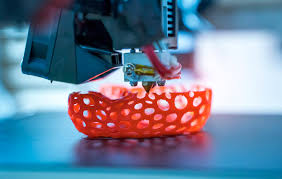 Artists and creators have also found value in incorporating laser scanners into their 3d printing workflows. For instance, contemporary sculptor Joshua Harker, known for pushing the boundaries of digital fabrication, has spoken about the importance of precise digitization in preserving artistic intent. “The more faithfully I can scan and replicate a sculpture,” he explained in a Forbes interview, “the more I can explore variations without compromising the original form. That freedom is essential in modern sculpture.” For creatives like Harker, laser scanners are not just tools—they’re extensions of the imagination.
The learning curve is another factor to consider. Modern laser scanners often come with user-friendly software and plug-and-play capabilities, making them accessible even to those without an engineering background. The automation of previously manual tasks—like aligning point clouds or cleaning scan artifacts—has drastically improved usability. As technology continues to advance, laser scanners are becoming more intuitive and powerful, reducing the barrier to entry.
Ultimately, whether a laser scanner for 3d printer setups is worth the cost depends on the user’s goals, the complexity of their projects, and the frequency of their workflows. For professionals and serious hobbyists who prioritize precision, flexibility, and speed, the investment often pays off handsomely. As the ecosystem of digital fabrication continues to evolve, laser scanning is proving not just to be a luxury but, increasingly, a necessity.
Artists and creators have also found value in incorporating laser scanners into their 3d printing workflows. For instance, contemporary sculptor Joshua Harker, known for pushing the boundaries of digital fabrication, has spoken about the importance of precise digitization in preserving artistic intent. “The more faithfully I can scan and replicate a sculpture,” he explained in a Forbes interview, “the more I can explore variations without compromising the original form. That freedom is essential in modern sculpture.” For creatives like Harker, laser scanners are not just tools—they’re extensions of the imagination.
The learning curve is another factor to consider. Modern laser scanners often come with user-friendly software and plug-and-play capabilities, making them accessible even to those without an engineering background. The automation of previously manual tasks—like aligning point clouds or cleaning scan artifacts—has drastically improved usability. As technology continues to advance, laser scanners are becoming more intuitive and powerful, reducing the barrier to entry.
Ultimately, whether a laser scanner for 3d printer setups is worth the cost depends on the user’s goals, the complexity of their projects, and the frequency of their workflows. For professionals and serious hobbyists who prioritize precision, flexibility, and speed, the investment often pays off handsomely. As the ecosystem of digital fabrication continues to evolve, laser scanning is proving not just to be a luxury but, increasingly, a necessity.
At the core of this discussion is the functionality of a laser scanner. By projecting laser beams onto a surface and analyzing the reflected data, these scanners can produce highly detailed 3d representations of physical objects. When combined with a 3d printer, this capability allows users to digitize real-world items and reproduce or modify them with impressive fidelity. This seamless loop—from physical to digital and back—offers a significant advantage over traditional modeling techniques, especially in time-sensitive or precision-critical projects.
Industry professionals have begun to voice strong support for laser scanners in this domain. For example, Grant Imahara, the late engineer and robotics expert from MythBusters, once emphasized the future of rapid prototyping during a TED Talk, stating, “The ability to replicate or evolve real-world components instantly using scanning and printing is not just convenient—it’s revolutionary.” Though he didn’t focus exclusively on laser scanning, the principle he described is at the heart of what laser scanners enable: a fast, precise, and intuitive design iteration process.
Laser scanners for 3d printer setups also shine in real-world applications. Consider the restoration of ancient artifacts. Museums and academic institutions have increasingly adopted laser scanning technologies to capture the fine details of delicate relics. These scans are then used to create accurate 3d-printed replicas for research, exhibition, or public education. In one notable project, researchers at the British Museum used high-resolution laser scans to digitize Assyrian sculptures, which were later replicated using 3d printers for interactive exhibits. The level of accuracy achieved would have been unthinkable without laser scanning.
In the realm of product design and engineering, laser scanners are empowering professionals to iterate faster and reduce development costs. A mechanical engineer working at a custom automotive company noted in an interview with Wired, “When you can scan an engine part and modify it digitally without measuring every inch manually, you save not just hours, but days of development. That’s time that directly translates into saved costs and improved innovation.” This synergy between laser scanning and 3d printing helps teams refine and reproduce parts with minimal error margins—crucial in high-performance industries.
However, the cost of a laser scanner for 3d printer users can be substantial, particularly for individuals or small teams. Entry-level models can range from several hundred to a few thousand dollars, depending on accuracy, resolution, and scan area. For this reason, potential buyers often weigh the benefits against the price tag. Yet, the value proposition becomes clearer when long-term goals are considered. Reduced prototyping time, fewer design errors, and the ability to archive or reverse-engineer parts all contribute to significant returns on investment.
Artists and creators have also found value in incorporating laser scanners into their 3d printing workflows. For instance, contemporary sculptor Joshua Harker, known for pushing the boundaries of digital fabrication, has spoken about the importance of precise digitization in preserving artistic intent. “The more faithfully I can scan and replicate a sculpture,” he explained in a Forbes interview, “the more I can explore variations without compromising the original form. That freedom is essential in modern sculpture.” For creatives like Harker, laser scanners are not just tools—they’re extensions of the imagination.
The learning curve is another factor to consider. Modern laser scanners often come with user-friendly software and plug-and-play capabilities, making them accessible even to those without an engineering background. The automation of previously manual tasks—like aligning point clouds or cleaning scan artifacts—has drastically improved usability. As technology continues to advance, laser scanners are becoming more intuitive and powerful, reducing the barrier to entry.
Ultimately, whether a laser scanner for 3d printer setups is worth the cost depends on the user’s goals, the complexity of their projects, and the frequency of their workflows. For professionals and serious hobbyists who prioritize precision, flexibility, and speed, the investment often pays off handsomely. As the ecosystem of digital fabrication continues to evolve, laser scanning is proving not just to be a luxury but, increasingly, a necessity.