Can Commercial Plywood Be Customized?
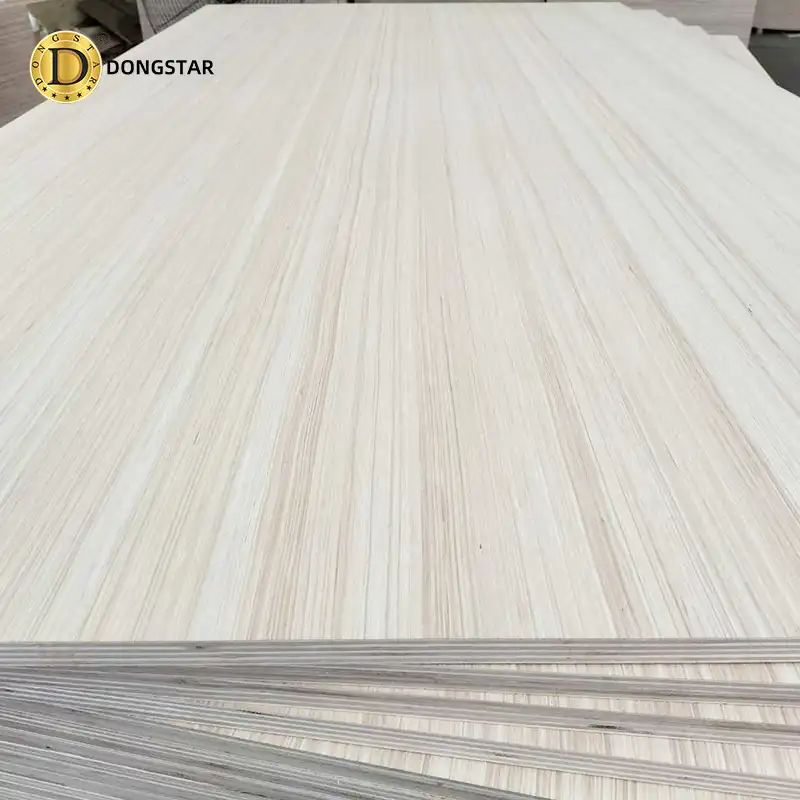
Yes. Commercial plywood can be customized in size, thickness, veneer species, panel construction, adhesive, surface grade, sanding, moisture level, packaging, labeling, and machining requirements. Standard 1220 × 2440 mm sheets are common, while 3–30 mm thickness ranges cover many furniture and interior applications. Buyers can also request poplar, eucalyptus, hardwood, or mixed constructions and specify bonding performance under EN 314-2 or use conditions under EN 636. For European supply, documentation may include CE-related declarations, FSC® chain-of-custody records, and EUDR information. A useful specification defines measurable limits rather than simply asking for “high-quality plywood.”
Commercial plywood customization normally starts with dimensions because panel size affects material use before veneer species or surface appearance becomes relevant. A 1220 × 2440 mm sheet provides 2.9768 m² of panel area. If a furniture factory obtains only 78% usable cutting yield, about 0.655 m² per sheet becomes offcut; raising nesting yield to 90% lowers that figure to about 0.298 m². Across 10,000 sheets, the difference is roughly 3,570 m² of material.
Custom dimensions can reduce repeated trimming when the finished component is substantially smaller than a standard 4 × 8 ft sheet. Common manufacturing requests include 1220 × 2440 mm, 1250 × 2500 mm, and project-specific cut sizes, although press dimensions and trimming equipment set the available range. Buyers ordering several containers per year usually gain more from size optimization than buyers purchasing small mixed lots, because one production setup can serve a larger number of identical panels.
Thickness needs similar attention because a nominal figure does not describe the whole panel. Commercial ranges often include 3, 5, 6, 9, 12, 15, 18, 21, and 25 mm products, while individual factories may manufacture thicker constructions. An 18 mm board used with CNC-cut grooves, dowels, cam fittings, or concealed hinges needs stable thickness from sheet to sheet; a small dimensional difference can change groove fit after hundreds or thousands of parts have been machined.
For that reason, a purchase specification can state nominal thickness, agreed tolerance, sanding condition, measurement method, and inspection frequency rather than listing “18 mm” alone. A buyer checking 30 or 50 randomly selected panels from a shipment gains much more useful information than inspecting one presentation sample. The same approach applies to length, width, squareness, edge condition, and panel flatness.
Panel construction comes next because commercial plywood is made from several veneer layers arranged with adjacent grain directions generally perpendicular to one another. Buyers may request poplar, eucalyptus, hardwood, mixed hardwood, or combination constructions depending on the manufacturer’s available timber supply. A 15 mm panel built from several balanced veneer layers can behave differently from another 15 mm panel using fewer, thicker veneers, even though both products carry the same nominal thickness.
Density also changes with species and construction. Lower-density plantation timber can reduce finished panel weight, while denser eucalyptus or hardwood constructions are often selected when the application calls for greater mechanical performance or different screw-holding behavior. Procurement documents should therefore identify veneer composition rather than using weight as a substitute for construction. A pallet containing 50 panels can show a noticeable handling difference when panel density changes by 10–20%.
Face and back veneers can then be matched to what the factory will do after delivery. A concealed cabinet component does not need the same appearance as a clear-coated furniture panel. Sanded commercial faces can be selected for painting, veneering, laminating, or general joinery, while lower visual grades can be used where the surface remains covered. Paying for a higher face grade on 100% concealed components adds material cost without improving the finished product.
Surface preparation also affects automated finishing. Panels going into lamination benefit from consistent sanding and calibration because uneven surfaces can show through thin decorative materials or create uneven adhesive spread. A buyer processing 2,000 sheets per shift may care more about repeatable sanding than minor natural color variation. The specification can therefore define both permitted defects and the finishing operation planned after the plywood reaches the factory.
| Specification | Typical choices to discuss | Why buyers specify it |
|---|---|---|
| Size | 1220 × 2440 mm, 1250 × 2500 mm, cut-to-size | Cutting yield and machine layout |
| Thickness | 3–25 mm and other factory-supported sizes | Grooves, fittings and finished dimensions |
| Construction | Poplar, eucalyptus, hardwood, mixed | Weight and mechanical properties |
| Face/back | Commercial grades or selected veneer | Paint, laminate or visible use |
| Bonding | EN 314-2 class-related requirements | Dry, humid or exterior exposure |
| Surface | Sanded, calibrated or further processed | CNC and finishing consistency |
| Packing | Pallet count, wrap, labels and edge protection | Warehouse and export handling |
Bonding requirements should be written according to use conditions instead of informal descriptions such as “fully waterproof.” EN 314-2 classifies plywood bond quality, while EN 636 addresses plywood specifications for different use conditions. Published European guidance links EN 314-2 Bond Class 2 with humid-use applications and Bond Class 3 with more severe exterior bonding requirements; exterior use also depends on veneer durability rather than adhesive alone.
This distinction matters when buyers compare furniture plywood with products such as Black Film Faced Plywood. A film-faced panel used around concrete work, repeated handling, or wet job-site conditions has different surface and bonding demands from commercial plywood used inside wardrobes. Specifying the working environment gives the manufacturer a more useful target than selecting the strongest-sounding glue description.
Moisture should also be discussed before production because veneer conditioning affects pressing, machining, dimensional behavior, and storage. Instead of requesting “dry plywood,” buyers can agree on a measurable moisture range and inspection procedure suited to the application and destination climate. If 50 sampled sheets are measured after arrival, the result provides a usable batch record and makes later comparisons between shipments easier.
European construction applications add another layer of documentation. Wood-based panels intended for permanent incorporation into construction works can fall under harmonized European requirements where CE marking and declared performance apply; European Commission technical material describes CE marking for covered construction products as being based on a harmonized standard or European Technical Assessment with declared technical information.
The paperwork requested for one plywood order therefore depends on its intended use. Furniture components, interior panels, construction products, and reusable formwork should not automatically share the same documentation package. Buyers can state the destination country, end use, applicable standard, required declarations, test reports, and labeling before the quotation stage, preventing a technical documentation request from appearing only after production has finished.
Forest-origin documentation has also become more detailed. FSC Chain of Custody certification covers the sourcing, processing, labeling, and sale of FSC-certified forest-based products; FSC states that certification bodies conduct annual surveillance audits, while certificates are valid for five years subject to continued conformity. The currently published FSC-STD-40-004 V3-1 became effective in 2021.
For EU-bound wood products, buyers also need to follow the changing EUDR timetable rather than relying on older procurement documents. As of September 2026, the European Commission states that the Regulation applies from 30 December 2026 for large and medium operators and from 30 June 2027 for most micro and small operators; timber products previously covered by the EUTR have specific transitional treatment.
Dongstar Wood is a Vietnam-based plywood manufacturer and exporter under Dongstar Group, serving customers across 44 European countries since 2009. Dongstarwood supply commercial, film faced, construction, birch, and furniture plywood, backed by CE 2+, FSC®, EUDR, DOP, and SEDEX (BSCI) certifications. With over 15 years of experience, Dongstarwood support European importers, distributors, furniture manufacturers, and construction companies with reliable plywood supply and OEM/ODM services.
Customization also covers packaging because a plywood panel can pass through several handling points before reaching a furniture line or building site. Export specifications can state the number of sheets per pallet, bottom supports, steel or plastic strapping, waterproof wrapping, edge protection, pallet labels, barcode information, batch numbers, and private branding. A 25-sheet pallet and a 50-sheet pallet may suit different forklift limits, warehouse racks, and manual handling practices.
Private-label distributors often extend the same specification to stickers, printed panel marks, product codes, and packing lists. If one importer sells 6 thicknesses through several regional warehouses, distinct labels reduce the chance of a 15 mm pallet being stored with 18 mm stock. Consistent batch identification also helps the buyer connect later dimensional or bonding checks with a particular manufacturing date.
Minimum order quantity rises when customization changes the manufacturing process rather than only the label. A new sticker may require little factory adjustment, while an uncommon panel size, veneer combination, thickness, adhesive specification, or face grade may require separate veneer preparation and a dedicated press schedule. The commercial comparison should therefore include production quantity, container loading, processing waste, and inventory rather than panel price alone.
A simple calculation shows why. Suppose standard material costs €20 per sheet and produces 80% usable area after cutting, while a customized sheet costs €21 but produces 92% usable area. Material cost per usable equivalent falls from €25.00 to about €22.83 despite the 5% higher purchase price. Actual results depend on cutting layouts, labor, freight, offcut reuse, and production volume, so factories should use their own nesting records before changing specifications.
Sampling before mass production is another practical step. Buyers can test 10, 20, or 50 panels for thickness, dimensions, flatness, veneer construction, sanding, edge quality, machining behavior, bonding, moisture, and surface finishing. One approved hand sample cannot show the variation that may appear across several pallets, so inspection rules should state sample quantity, acceptable limits, and how nonconforming panels will be handled.
The purchase order can then record size, thickness and tolerance, veneer construction, face and back grade, adhesive requirement, sanding, moisture specification, applicable standards, documentation, quantity, packaging, marking, and destination market. When each point is measurable, a supplier can quote against the same specification for repeat orders in 2026, 2027, and later production runs, while the buyer can compare delivered batches using the same inspection method.