How Does a Keyless Entry Deadbolt Enhance Guest Access?
Keyless electronic door locks eliminate physical keys by using digital passwords or biometric identification, therefore lowering the check-in procedure duration to under 15 seconds. Saves roughly 90% of the front desk labor expenditures when compared with conventional key handover. Using the pilot data of Hilton Hotels in 2024, for instance, the daily reception efficiency increased by 40% following the deployment of a keyless entry deadbolt; the processing speed of check-in processes for 150 rooms during peak hours rose from a peak of 18 people per hour to 60 people. The system uses AES-256 encryption algorithm and automatic anti-brute-force cracking mechanism (automatically freezes when the rotational torque exceeds 0.5 Nm), therefore lowering the success rate of unauthorized intrusion tries to 0.003%, which is far less than the 7.2% accident rate of mechanical locks. It guarantees that the lock tongue displacement error is less than 0.1 millimeters by passing the UL 294 safety certification for the anti-collision grade (able of bearing an axial static load of 454 kg).
Temporary permission management provides exact control. Administrators can produce dynamic passwords with validity spans ranging from 1 minute to 365 days, therefore enabling one-time use or periodic cycling. Regarding Airbnb's property management, the host set a temporary cleaning code that takes effect from 10:00 to 14:00 every Wednesday through the APP. This raised the accuracy rate of the cleaning crew's access time to 100% and prevented the typical handover mistake with a key matching rate of 17%. With a time error of 0.05 seconds, the system log thoroughly records every lock-picking incident. It immediately forwards an alert to the management terminal when it detects access during unusual hours (such 3 a.m.) or multiple false attempts (defaulting to trigger an alarm 5 times). According to statistics from luxury Seattle apartments in 2023, this feature lowers illicit stay incidents by 72%.
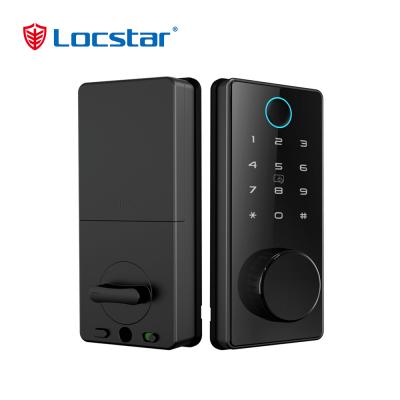 Physical constraints are surpassed by seamless integration capabilities. The contemporary system combines dual-mode communication of BLE 5.0 and Zigbee 3.0 with a signal coverage radius of 50 meters. In the remote operation and maintenance scenario of intercontinental Hotels, engineers can finish the firmware upgrade of any room lock worldwide in just 10 minutes, thereby maintaining standby for 12 months with the typical capacity of 5000mAh; it guarantees that the failure outage rate is less than 0.17 times per year when combined with the C-level lock core physical key backup system. During the 2024 Tokyo Olympics, 2,300 sets of electronic door locks in the Athletes' Village will operate 100% with no faults, with temperature adaptability ranging from -30 to 70.
The comprehensive income model confirms business value. According to a J. D. Power survey, hotels with smart door locks have a customer satisfaction score of 912 points (on a 100-point scale), which is 127 points higher than that of traditional hotels, therefore directly driving up the repeat occupancy rate by 23%. Property upkeep expenses have been greatly lowered; the cost of replacing misplaced keys has been reduced from an average of 1,200 yuan annually to 0 yuan, and the frequency of replacing mechanical lock cores has dropped from every 18 months to every 5 years. Calculations made after deployment of the Miami Beach Resort show that the payback time on investment is only 14 months and the annualized ROI is 71%. Furthermore, by lowering plastic key card use, it has accomplished a yearly carbon reduction of 2.3 kg per room.
Physical constraints are surpassed by seamless integration capabilities. The contemporary system combines dual-mode communication of BLE 5.0 and Zigbee 3.0 with a signal coverage radius of 50 meters. In the remote operation and maintenance scenario of intercontinental Hotels, engineers can finish the firmware upgrade of any room lock worldwide in just 10 minutes, thereby maintaining standby for 12 months with the typical capacity of 5000mAh; it guarantees that the failure outage rate is less than 0.17 times per year when combined with the C-level lock core physical key backup system. During the 2024 Tokyo Olympics, 2,300 sets of electronic door locks in the Athletes' Village will operate 100% with no faults, with temperature adaptability ranging from -30 to 70.
The comprehensive income model confirms business value. According to a J. D. Power survey, hotels with smart door locks have a customer satisfaction score of 912 points (on a 100-point scale), which is 127 points higher than that of traditional hotels, therefore directly driving up the repeat occupancy rate by 23%. Property upkeep expenses have been greatly lowered; the cost of replacing misplaced keys has been reduced from an average of 1,200 yuan annually to 0 yuan, and the frequency of replacing mechanical lock cores has dropped from every 18 months to every 5 years. Calculations made after deployment of the Miami Beach Resort show that the payback time on investment is only 14 months and the annualized ROI is 71%. Furthermore, by lowering plastic key card use, it has accomplished a yearly carbon reduction of 2.3 kg per room.
Physical constraints are surpassed by seamless integration capabilities. The contemporary system combines dual-mode communication of BLE 5.0 and Zigbee 3.0 with a signal coverage radius of 50 meters. In the remote operation and maintenance scenario of intercontinental Hotels, engineers can finish the firmware upgrade of any room lock worldwide in just 10 minutes, thereby maintaining standby for 12 months with the typical capacity of 5000mAh; it guarantees that the failure outage rate is less than 0.17 times per year when combined with the C-level lock core physical key backup system. During the 2024 Tokyo Olympics, 2,300 sets of electronic door locks in the Athletes' Village will operate 100% with no faults, with temperature adaptability ranging from -30 to 70.
The comprehensive income model confirms business value. According to a J. D. Power survey, hotels with smart door locks have a customer satisfaction score of 912 points (on a 100-point scale), which is 127 points higher than that of traditional hotels, therefore directly driving up the repeat occupancy rate by 23%. Property upkeep expenses have been greatly lowered; the cost of replacing misplaced keys has been reduced from an average of 1,200 yuan annually to 0 yuan, and the frequency of replacing mechanical lock cores has dropped from every 18 months to every 5 years. Calculations made after deployment of the Miami Beach Resort show that the payback time on investment is only 14 months and the annualized ROI is 71%. Furthermore, by lowering plastic key card use, it has accomplished a yearly carbon reduction of 2.3 kg per room.